Skip to content


Major upgrades to the UK’s research facilities are progressing, even as the Science and Technology Facilities Council (STFC) adjusts operations to manage funding pressures.
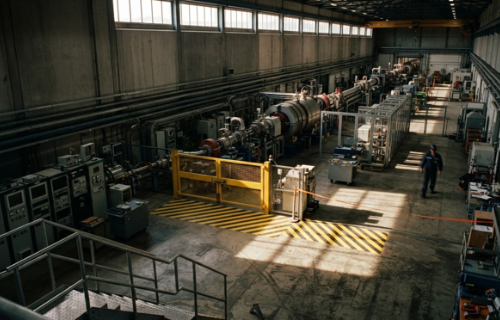
At the Central Laser Facility, the £17 million HiLUX project has achieved first light on the Ultra infrared laser system. The milestone marks progress towards a more powerful experimental capability for researchers who use intense lasers to investigate matter and its behaviour under demanding conditions.
Diamond Light Source is also advancing its fourth-generation synchrotron upgrade. The project aims to deliver beams up to 70 times brighter than those available at the current facility, opening possibilities for more detailed imaging and analysis. Synchrotron techniques support research across fields including materials science, chemistry and the life sciences, where understanding structures and processes at small scales can inform new discoveries.
These investments demonstrate the long-term value of shared scientific infrastructure. Specialist instruments allow research teams to carry out experiments that would be difficult or impossible within individual laboratories. They also bring together facility scientists, academic researchers and industry users around complex technical challenges.
At the same time, STFC is making changes to keep its facilities within available budgets. Measures described include efficiencies across its operations, reduced running cycles and changes to some beamline and user-support arrangements. Activity at the ISIS Neutron and Muon Source and the Central Laser Facility is among the areas affected.
For researchers, operating time and access to specialist support are important practical considerations. A more capable instrument does not necessarily mean more experimental opportunities if facility schedules are constrained. Teams planning projects may need to monitor availability closely and consider how changes to access could affect their work.
The developments present a complex picture rather than a simple story of expansion or contraction. Investment in next-generation technology can strengthen future research capability, while shorter operating periods may affect what scientists can do today. Maintaining that balance will matter to the laboratories and businesses that depend on these national facilities.
For the Lab Innovations community, the story highlights the role of advanced instrumentation—and the people who operate it—in supporting research across disciplines. As the upgrades progress, clear communication about access, timelines and user support will help researchers make the most of these important UK resources.