Skip to content



Europe is pioneering the quantum revolution with Q-PLANET, a €250 million initiative turning delicate neutral atom experiments into reliable, industrial-scale products. Discover how this bold move is setting the stage for scalable quantum computing and sensing across the continent!
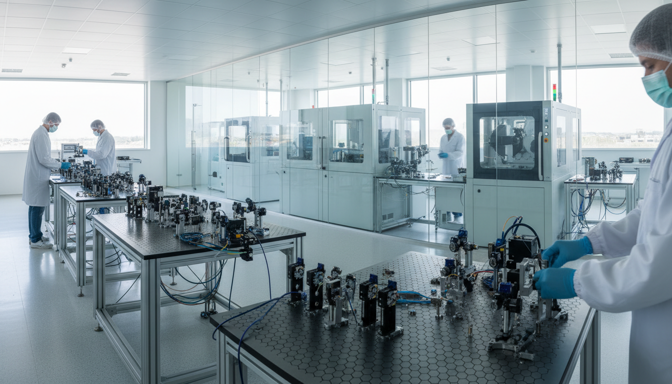
Imagine a future where quantum technology transcends the confines of research laboratories to become a staple of reliable, repeatable industrial production. Europe is actively shaping this vision through the ambitious Q-PLANET programme, a €250 million initiative designed to industrialise neutral atom quantum components across the continent. This pilot line aims to transform delicate quantum experiments into robust, manufacturable products that can be consistently produced across multiple sites, marking a significant stride in the quantum revolution 12.
Neutral atom quantum systems harness precisely controlled atoms manipulated by lasers and optical devices, offering promising scalability for quantum computing and sensing. However, these systems currently face challenges due to variability stemming from complex assemblies that differ between laboratories. Q-PLANET addresses this by developing comprehensive process and assembly design kits—blueprints that standardise manufacturing rules, interfaces, and packaging details. This approach draws inspiration from the semiconductor industry, where design kits effectively bridge the gap between circuit design and fabrication capabilities.
Coordinated by Pasqal and involving 28 organisations across 11 European countries, the programme encompasses a broad spectrum of technologies, from chip-based lasers at various wavelengths to atom chips and microfabricated vapour cells. The collaboration includes universities, national labs, and industry leaders, reflecting the multidisciplinary nature of quantum machines that blend atomic physics with optics, electronics, and software engineering 1.
Industrialisation extends beyond miniaturisation; factors such as laser stability, thermal behaviour, packaging precision, and long-term reliability critically influence performance. Q-PLANET places equal emphasis on rigorous testing, developing measurement methods and calibration frameworks to ensure components perform consistently across production batches and sites. This meticulous approach is vital for elevating technology readiness levels and establishing accessible fabrication capabilities.
The pilot line’s objective is not mass production but the establishment of controlled processes that enable external organisations to design within published process limits, source components predictably, and integrate them without extensive re-engineering. Achieving this milestone would signify the evolution of a pilot line into true industrial infrastructure, fostering a sustainable ecosystem for quantum technologies in Europe.
Beyond manufacturing, the initiative supports diverse applications—from quantum computing and sensing to secure communications—through a shared production base, reducing duplication and accelerating innovation. For laboratory managers, scientists, and quality professionals, Q-PLANET heralds a shift from experimental quantum devices to dependable products, inviting stakeholders to engage with emerging standards and prepare for a future where quantum components become integral to advanced laboratory and industrial workflows.
As the quantum revolution moves from theoretical promise to tangible production lines, tools like QC Design’s recently published “Plaquette” platform further complement these efforts by providing hardware-aware design frameworks for fault-tolerant quantum computers. Such advancements underscore the importance of integrating device physics with practical engineering to realize scalable quantum systems 3.
Now is the time to stay informed, collaborate, and embrace the industrialisation of quantum technology to unlock its full potential, as Europe leads the charge in transforming quantum science into everyday reality.