Skip to content



A new £20 million research hub centred on the Cambridge Biomedical Campus will bring together artificial intelligence, bioengineering and advanced laboratory models to improve how discoveries are translated into treatments.
Funded by the Medical Research Council, the Pre-clinical Translational Models Hub will work with hospitals, research institutes and industry partners. Its focus is a familiar challenge for researchers: promising findings in the laboratory do not always predict what will happen in patients. By developing models that better reflect human biology and disease, the hub aims to make that step from discovery to clinical research more reliable.
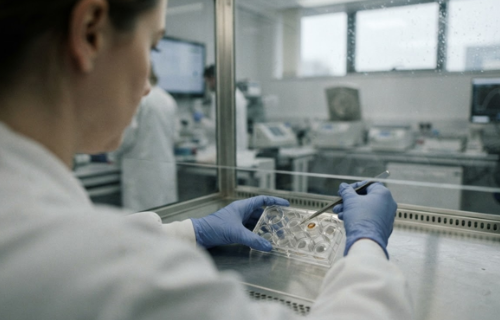
Organoids — three-dimensional structures grown from cells that mimic some features of human organs — are central to the approach. Combined with bioengineering and AI, they could give researchers new ways to investigate disease and assess potential treatments in models that are more closely connected to human biology. The hub also aims to capture characteristics that vary between patients, supporting research into more personalised approaches to medicine.
For laboratory teams, the interest lies not only in the technologies themselves but in how they work together. Building useful translational models requires careful model development, consistent methods and close collaboration between those generating laboratory data and those using it to inform clinical research. Bringing these disciplines and partners together is an important part of the hub’s ambition.
The initiative could also contribute to efforts to reduce reliance on animal testing where suitable human-based models can provide meaningful evidence. Whether any particular model can replace an existing method will depend on how well it performs for the question being studied.
The hub is at an early stage, so its effect on treatment development remains to be seen. For now, it represents a substantial investment in a practical question for the laboratory community: how can researchers build better models of human disease, and use them to make discoveries more relevant to patients?