Skip to content



AI, robotics and connected laboratory systems are beginning to reshape scientific research. The opportunity is clear, but success depends on trusted data, sound governance and human expertise.
Artificial intelligence and robotics are moving from individual laboratory tasks into more connected research environments.
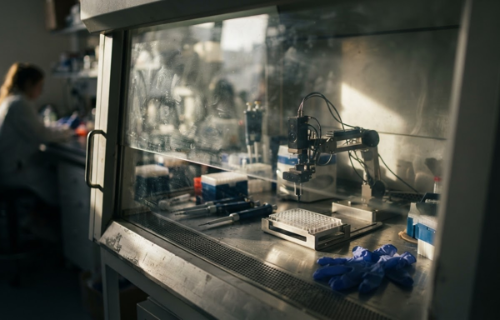
Across universities, research centres and commercial laboratories, teams are exploring systems that can run experiments, capture data, identify errors and help researchers decide what to investigate next. King’s Autonomous Labs is one example, launching an initial £150,000 fund to help researchers test new autonomous approaches.
The aim is not to remove scientists from the process. Instead, it is to reduce the time spent on repeatable, routine work and give researchers more capacity to focus on experimental design, interpretation and problem-solving.
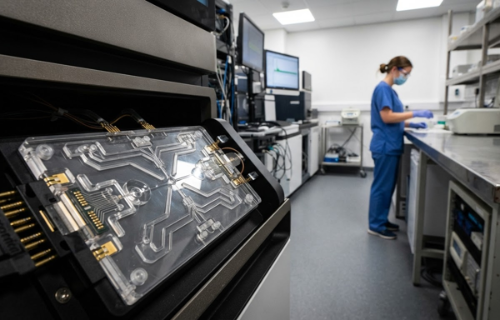
In a more autonomous laboratory, instruments, sensors and software work together. Automated systems can capture data continuously, flag potential pre-analytical errors and monitor performance in real time. AI can then help teams process large data sets and identify patterns that may otherwise take longer to spot.
The potential reaches far beyond one scientific discipline. In molecular biology, automated workflows and intelligent databases can support the analysis of large volumes of protein and sequence data. In clinical and diagnostic settings, connected systems can help improve consistency in data interpretation, quality control and reporting.
But the technology must be introduced carefully.
Reliable automation depends on validated algorithms, clear governance and strong data practices. Laboratories also need to understand where human judgement remains essential, particularly when results affect research direction, quality decisions or patient care.
As automation becomes more capable, the challenge for laboratories will be finding the right balance. The strongest systems will be those that combine dependable technology with the scientific expertise needed to question results, manage risk and make informed decisions.
Autonomous laboratories are no longer a distant idea. The foundations are already being built, and the next phase will be defined by how effectively organisations connect their people, platforms and processes.