Skip to content



MOBILion Systems is positioning its SLIM ion mobility technology as more than a single-instrument feature — the company frames it as a platform capable of upgrading performance across an entire range of mass spec detector types, from standard quadrupole systems to high-resolution proteomics platforms. The release highlights new modes of operation (PAMAF and PAMAT) aimed at improving sensitivity, speed, and data quality across proteomics and targeted workflows, with CEO Melissa Sherman describing SLIM as a way to “redefine” mass spectrometry portfolios rather than serve one niche application.
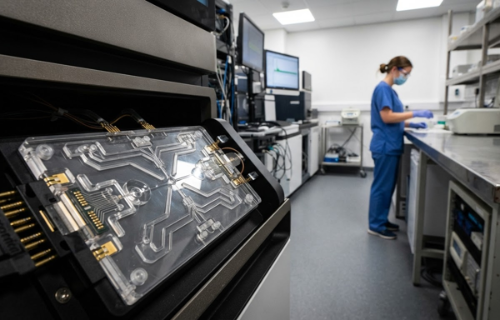
MOBILion Systems, Inc., a leader in separation science innovation, showcases the expanding impact of its proprietary SLIM™ (Structures for Lossless Ion Manipulation) technology across the full mass spectrometry landscape.
For laboratory teams, the value of SLIM lies in its ability to reduce analytical complexity without adding workflow burden. By improving ion separation before mass analysis, SLIM-enabled systems can help labs reduce interference-driven rework, increase confidence in compound identification, and extract more usable information from challenging samples.
Through research and ongoing application development with its customers and partners, MOBILion continues to demonstrate how SLIM high-resolution ion mobility can help laboratories generate cleaner, faster, and more information-rich mass spectrometry data. These benefits are relevant across routine and advanced workflows, including PFAS analysis, drug discovery, biopharmaceutical characterization, proteomics, lipidomics, metabolomics, food testing, and clinical and translational research.
Recent activity continues to reinforce that SLIM is not limited to a single instrument configuration or application niche. When integrated upstream of mass spectrometry, SLIM has the potential to improve performance across detector classes commonly used in laboratory environments, including nominal mass quadrupole systems, high-resolution QTOF platforms, and next-generation proteomics systems. This breadth gives labs and instrument partners a route to improve data quality, sensitivity, robustness, and throughput without treating SLIM as a single-workflow solution, instead it is positioned as a unique and highly differentiated platform asset for mass spectrometry vendors seeking to advance their portfolios toward the next decade or more of best-in-class analytical performance.
“MOBILion’s mission has always been to reveal what conventional LCMS workflows leave unseen,” said Melissa Sherman, Ph.D., Founder and CEO of MOBILion Systems. “With our high-resolution ion mobility mass spectrometry platform. MOBIE, customers are already demonstrating value in demanding real-world applications. With the PAMAF™ (Parallel Accumulation Mobility Aligned Fragmentation) mode of operation and our proteomics work, we are showing that SLIM can go further, changing the way ions are separated, selected, fragmented, and converted into actionable biological insights. As legacy architectures approach practical performance limits, SLIM offers a route to redefine an entire mass spectrometry portfolio from low to high resolution systems, rather than a single workflow or product line.”
MOBILion’s SLIM-enabled platform strategy spans three high-value mass spectrometry opportunities: a QTOF configuration optimized for proteomics powered by PAMAF that improves ion utilization to deliver deeper proteome and PTM coverage with greater sensitivity, speed, and accuracy; a QTOF integration for non-proteomics workflows that reduces interferences and improves data quality leading to faster and higher value insights; and a new SLIM-enabled QQQ mode of operation PAMAT (Parallel Accumulation Mobility Aligned Targeting), designed to deliver industry-leading sensitivity and robustness capable of redefining targeted workflow performance with increased throughput, quantitative accuracy and precision.
MOBILion’s current and emerging platforms reflect a unified strategy: use SLIM high resolution ion mobility to improve how ions are separated, transmitted, fragmented, and interpreted across mass spectrometry to enhance instrument performance, followed by leveraging the cleaner, richer data generated to strengthen downstream artificial intelligence workflows. As laboratories increasingly seek to accelerate and automate data analysis and extract more insights from complex datasets, the unique ability of SLIM enabled instruments to generate cleaner data becomes a strategic advantage.