Skip to content


Unlock the secrets behind why EGFR-mutant lung cancer outsmarts targeted therapies like osimertinib—and discover how cutting-edge CRISPR-engineered models are paving the way for smarter, longer-lasting treatments. Join the race to outwit cancer’s resistance and transform patient outcomes forever!
Imagine a treatment that initially works brilliantly but gradually loses its power. This frustrating reality confronts many patients with EGFR-mutant non-small cell lung cancer (NSCLC), where targeted therapies like osimertinib offer hope yet eventually face resistance. Osimertinib, a frontline standard of care, has transformed outcomes by significantly improving progression-free survival and overall prognosis. However, despite an 80% response rate in clinical trials, the median progression-free survival remains under two years as tumors evolve and develop mechanisms to bypass the drug’s effects12.
Understanding this resistance is crucial for researchers and clinicians alike. Traditional approaches to studying drug resistance often rely on patient samples or prolonged drug exposure in cell cultures, which are limited by scarcity, time constraints, and reproducibility challenges. These hurdles have slowed the development of next-generation therapies capable of outsmarting cancer’s adaptability.
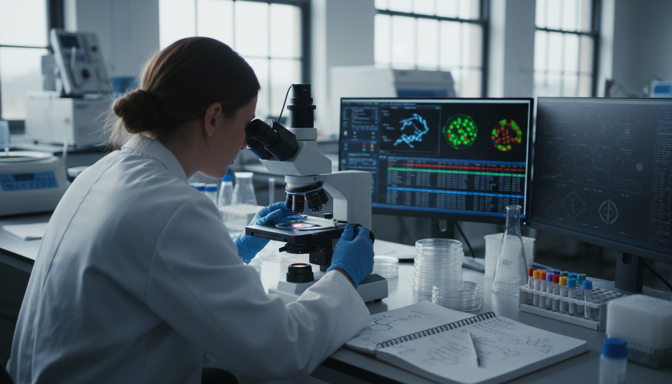
A groundbreaking approach pioneered by scientists at ATCC and the Broad Institute is changing this landscape. Utilizing CRISPR gene editing, they engineered 13 isogenic NSCLC cell lines, each harboring a specific resistance mutation observed in patients treated with osimertinib. These models include mutations in critical pathways such as EGFR, KRAS, and BRAF, as well as oncogenic fusions that have been notoriously difficult to study. Because each resistant line differs from its sensitive counterpart by just one genetic alteration, researchers can directly compare and dissect the mechanisms driving resistance.
This innovation enables scalable, reproducible, and systematic study of resistance, allowing simultaneous exploration of multiple pathways. Such models accelerate discovery and reveal vulnerabilities that might otherwise remain hidden. For instance, testing combination therapies on these cell lines could identify strategies to prevent resistance before it arises clinically. Moreover, these models are openly accessible through platforms like the Cancer Dependency Map, fostering global collaboration. By linking physical cell lines with genomic data, scientists ensure reproducibility and enable advanced computational analyses, including AI-driven drug discovery.
The implications extend beyond lung cancer. Drug resistance remains a universal challenge in oncology, and this proactive, model-driven approach offers a roadmap to more durable treatments. This is particularly relevant as the therapeutic landscape evolves, with emerging agents such as amivantamab and lazertinib poised to lead EGFR NSCLC therapy revenue by 2036, highlighting the intensifying competition and innovation in post-osimertinib resistance management3.
Furthermore, lung cancer in never-smokers and younger patients often carries actionable driver mutations like EGFR, underscoring the importance of tailored approaches to resistance mechanisms in diverse patient populations4.
For laboratory managers, technicians, and researchers, embracing these cutting-edge tools means contributing to a future where cancer therapies are not just initially successful but sustainably so. The call to action is clear: support and integrate these advanced models into your research workflows. By doing so, you become part of a global effort to outpace cancer’s evolution and improve patient outcomes worldwide.